Inside: Christmas words in Spanish & Spanish Christmas words for class. Essential Spanish Christmas vocabulary, a Christmas word list, Spanish Christmas expressions, holiday greetings & useful phrases, plus cultural notes & easy activities for Spanish learners and students of all ages.
Author – Allison Wienhold
Published – November 26, 2026
TPT CYBER SALE!
Before I get into the full post, I wanted to make sure you know Monday, November 30th-Tuesday, December 1st you can get 25% off all of Mis Clases Locas TPT resources using the code CYBER26.
I know money is TIGHT this year, so make sure to leave reviews on past purchases to earn TPT credits & shop the cyber sale with code CYBER26 for the best deals! Here are my top suggestions for right now.
Winter Holidays bundle – everything you need for multiple days of activities, plus bell ringers for all December
Piñata mini-unit – for Las Posadas or a fun Spanish project (or get it for a steal in my new Mexico Bundle)
First day back Find Someone Who – to use TODAY
NEW Dance Around the World Slides – great for holidays around the world
Bell Ringer Bundle – get into a solid routine when you need it most!
Or grab some culture rich movies! Perfect for emergency sub plans when you or your kids inevitably get sick this month. Try my Real People Movie Favs or my Fav animated movies
Why Christmas Words in Spanish Are Not One List
If you know me, I’m not much for a big vocab list. This is not really my style, but rather by request of teachers who wanted helpful navidad vocabulary.
If your students only learn árbol, regalos and Papá Noel, they are going to be confused the first time a video mentions Nochebuena, los Reyes Magos or las posadas. Spanish Christmas words change across Spanish-speaking countries, and sometimes from family to family. That is something worthy for students to notice.
In a lot of Spanish-speaking countries, the big night is not December 25. It is Nochebuena, the night of December 24th. Gifts might come from Papá Noel (Santa Claus, or Father Christmas), from Santa Claus, from los Reyes Magos on January 6th, or from El Niño Dios. Some families do more than one. So this is not a “memorize 50 holiday words” packet. It is the essential Spanish Christmas vocabulary you could put front of students if needed. A Christmas word list you can use as a word bank, with the regional notes I wish I had on one page.
I already have posts for Christmas songs in Spanish class, holiday baile viernes, and winter holiday lesson plans. This one is the vocabulary list: Spanish Christmas words, greetings & the cultural terms that come up during the Christmas season, and in the wider holiday season.
As always, preview everything, and do not make December only about Navidad. If you need a different winter celebration in the mix, I also have Spanish songs for Hanukkah.
Christmas Words in Spanish for the Season
These are the calendar words I would start with. They work for Spanish 1, and for students of all ages, if you keep the input clear and give a date to hang each one on. I leave the definite articles on the list (la Navidad, el día de Navidad, la Nochebuena) so Spanish learners hear el and la from the start.
| Spanish | English | Notes |
|---|---|---|
| la Navidad | Christmas / the Christmas season | The Christmas season, and also December 25. Holiday names are capitalized. |
| el día de Navidad | Christmas Day | In many Spanish-speaking countries this is a quieter day of leftovers and visits. |
| la Nochebuena | Christmas Eve (the night of December 24th) | The big family dinner & celebration in most places. Literal meaning: “the good night.” |
| la cena de Nochebuena | Christmas dinner / Christmas Eve dinner | This is the Christmas dinner people actually talk about, usually on the night of December 24th. |
| la misa del gallo | midnight Mass | Christmas Eve Mass, often at midnight. The name means “Rooster’s Mass.” |
| las posadas | Las Posadas | Especially Mexico, and some of Central America, December 16-24. Nine nights remembering Mary and Joseph looking for lodging. |
| la novena de aguinaldos | Christmas novena | Common in Colombia, December 16-24, with prayers, songs & family. |
| el Día de los Santos Inocentes | Day of the Holy Innocents (Dec. 28) | In many places this works like April Fools’ Day. A prank is una inocentada. |
| la Nochevieja | New Year’s Eve | Also called the víspera de Año Nuevo. Literal meaning: “the old night.” |
| el Año Nuevo | New Year | Also el día de Año Nuevo for January 1. |
| la Noche de Reyes | Night of the Three Kings (Jan. 5) | Many children leave out a shoe this night. |
| el Día de Reyes / el Día de los Reyes Magos | Three Kings Day (January 6th) | Traditional gift day in Spain, Mexico & many other Spanish-speaking countries. |
A quick teacher tip: I would write the dates on the board the first time you use these Christmas words in Spanish. Nochebuena and Navidad sound close enough that novice students mix them up, and Nochevieja will not stick until they see it next to December 31.
Papá Noel, Santa Claus & Los Reyes Magos
This is the conversation that makes a quiet class sit up. Who actually brings the gifts?
| Spanish | English | Notes |
|---|---|---|
| Papá Noel | Santa Claus / Father Christmas | Common in Spain and widely understood. In English this is Santa Claus, or Father Christmas. |
| Santa Claus / Santo Clos | Santa Claus | You will hear “Santa Claus” a lot in Latin America. In Mexico, Santo Clos is also used. |
| el Viejito Pascuero | Santa Claus | Chile. |
| los Reyes Magos | the Three Wise Men / Three Kings | Melchor, Gaspar y Baltasar. Traditional gift-bringers on January 6th. |
| el Niño Dios / el Niño Jesús | baby Jesus | In some families, gifts come from the Niño Dios. |
| el Olentzero | Basque Christmas figure | A charcoal seller who brings gifts in the Basque Country. |
| el Tió de Nadal | Christmas log (Catalonia) | Families “feed” the log, then it “poops” small gifts. Students cannot believe this is real. |
| el elfo | elf | More of a U.S.-style Christmas word, but students ask for it. |
| los renos | reindeer | Same. Useful if you are comparing traditions, not as the “default” story. |
| el trineo | sleigh | |
| la cabalgata de Reyes | Three Kings parade | Usually the evening of January 5, especially in Spain. |
I always tell students: do not assume Papá Noel, Santa Claus or Father Christmas shows up everywhere on December 25. In many families, the big gifts come from los Reyes Magos on January 6th. In others, Santa Claus or Papá Noel comes on Nochebuena or Navidad, and the Reyes bring something smaller, or sweets. Some families do both, especially in bigger cities. The honest phrase to model is en muchas familias de… or es común en…, not “in Mexico everyone does this.”
If you want a full lesson on January 6th, I already wrote Los 3 Reyes Magos in Spanish Class. For a one-day reading after break, I have a Día de los Reyes Magos reading on TpT.
Christmas Decorations & the Nativity in Spanish
These Christmas words in Spanish are easy to teach with a picture of each vocabulary term. Project a photo, name what you see, and let students chime in.
| Spanish | English | Notes |
|---|---|---|
| el árbol de Navidad | Christmas tree | |
| los adornos | decorations / ornaments | |
| las luces de Navidad / las luces navideñas | Christmas lights | In some places you will also hear los foquitos. |
| la estrella | the star | |
| la corona (de Navidad) | wreath | |
| la guirnalda | garland | |
| el muérdago | mistletoe | |
| el acebo | holly | |
| las campanas / los cascabeles | bells / jingle bells | |
| el calcetín (navideño) | stocking | |
| el nacimiento / el pesebre / el belén | nativity scene | Nacimiento and pesebre are common in Latin America. Belén is the usual word in Spain. |
| la flor de Nochebuena | poinsettia | Native to Mexico. Also called flor de Navidad. |
| el muñeco de nieve | snowman | Still useful, even if a lot of Spanish-speaking countries do not get snow in December. |
| la nieve | snow | |
| la piñata | piñata | A star-shaped piñata is common at posadas. |
| la tarjeta navideña | Christmas card | |
| el papel de regalo | wrapping paper | |
| los regalos | gifts / presents | Abrir los regalos, envolver los regalos, regalar. |
The nativity words are worth a 30-second pause. If a reading says belén and your students only know nacimiento, they think it is a new thing. I would put all three words on the board the first time and say they are regional, not three different displays.
Christmas Food Words in Spanish
You do not need a full foods unit in December. You need the dishes that will show up in a video, a song or a student story, especially around Christmas dinner.
| Spanish | English | Notes |
|---|---|---|
| el turrón | nougat | Very typical in Spain, and eaten in other countries too. |
| los polvorones / los mantecados | shortbread-style Christmas sweets | Especially Spain. |
| el ponche (navideño) | Christmas punch | Common in Mexico, often with fruit & cinnamon. Some versions are for adults, so preview recipes. |
| los tamales | tamales | A Nochebuena food in Mexico and other places. |
| los buñuelos | fritters | Mexico and elsewhere. |
| la rosca de Reyes / el roscón de Reyes | Three Kings cake | January 6. A little figure is often hidden inside. |
| el panetón | panettone | Very common in parts of South America, especially Peru. |
| las hallacas | hallacas | Venezuela’s big Christmas dish. |
| el lechón | roast pork | Christmas food in many places, including the Caribbean. |
| el pavo | turkey | Used in some places. It is not the default meal everywhere. |
| el chocolate caliente | hot chocolate | |
| las uvas de la suerte | lucky grapes | A New Year’s Eve tradition, especially in Spain. One grape for each clock strike at midnight. |
If a student asks, “But what do they eat for Christmas dinner?” the best answer is: it depends on the country, and even on the family. That is a better cultural lesson than one menu on a worksheet.
Holiday Greetings, Spanish Greetings & Useful Phrases
These are the Spanish Christmas expressions and useful phrases I would actually have on the wall in December. They work as holiday greetings, and a few are just Spanish greetings you can use all through the holiday season.
¡Feliz Navidad! Merry Christmas, or Happy Christmas. This is the one everyone knows, and yes, you should still teach it on purpose. Students can say it, but they cannot always spell it.
¡Felices Fiestas! Happy Holidays. A good option when you want a greeting that is not only about Navidad.
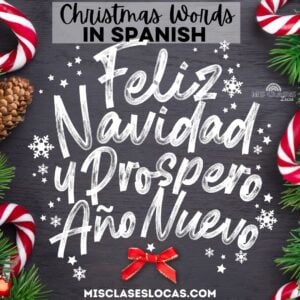
¡Feliz Navidad y Próspero Año Nuevo! Merry Christmas and a prosperous New Year. You will see this on cards a lot.
¡Feliz Año Nuevo! Happy New Year.
Te deseo una muy Feliz Navidad. I wish you a very Merry Christmas.
¿Cómo celebras la Navidad en tu familia? How do you celebrate Christmas in your family? This is my favorite conversation prompt, because the answer might be “we don’t,” and that needs to be an easy, respectful option in class.
¿Qué te trajo Papá Noel? / ¿Qué te trajeron los Reyes? What did Santa / the Three Kings bring you? Use the one that matches the tradition you are talking about that day.
Other useful chunks: decorar el árbol, cantar villancicos, abrir los regalos, envolver los regalos, ir a la misa del gallo, visitar a la familia, preparar la cena de Nochebuena.
For New Year’s Eve vocabulary like las doce uvas and Nochevieja (the víspera de Año Nuevo), I would keep it short here and send you to my winter holidays post, plus the first-day-back ideas in 1st Day After Winter Break for Spanish & New Year’s in Spanish Class Blog Post
Cultural Notes: Posadas, Aguinaldo & Villancicos
A vocabulary list is not enough if students never hear how the words are used. These are the three terms I would not skip.
Las posadas
Las posadas are a big one in Mexico, and you will also see them in parts of Central America. For nine nights, December 16 to 24, neighbors and family reenact Mary and Joseph asking for lodging. People go from house to house, there are songs, ponche, and often a piñata. A traditional posada piñata is a star, not a cartoon character.
If you want a hands-on cultural day that is not only for December, I have a piñata mini-unit and a Las Piñatas project on TpT. It works for Hispanic Heritage Month or for a posadas lesson in December.
Aguinaldo
Aguinaldo is one of those Christmas words in Spanish that will absolutely trick a dictionary if students only get one meaning.
- In a lot of Latin America, el aguinaldo is the year-end bonus people receive at work.
- In Mexico, aguinaldos can also be the little bags of candy, fruit or treats children get at a posada.
- In places like Puerto Rico and Venezuela, aguinaldos are also Christmas songs, in the same big family as villancicos and parranda.
I would teach the meaning that matches your reading or video that day, then say out loud: this word can mean a few different things.
Villancicos
Villancicos are Christmas carols. Some are traditional and very well known, like Los peces en el río, Campana sobre campana, or Noche de paz (Silent Night). Some of the songs my high school students actually like are newer. I keep the song list in its own post so this one can stay a vocabulary resource: Spanish Class Christmas Songs. If you use one in class, talk about the music instead of only playing it in the background. And please preview. School cultures are different, and not every Navidad song is a fit for every room.
For a two-minute brain break that is not even in Spanish, I have holiday Just Dance videos for baile viernes.
Easy Activities for Christmas Words in Spanish
You do not need two weeks of Navidad lesson plans. Most of us have a few odd days before break, short classes, and students who are already mentally at the mall. Here is what I would actually do with this essential Spanish Christmas vocabulary.
A picture of each vocabulary term. I would rather show a picture of each vocabulary term than start with a giant translation list. Make a simple slide deck or a set of cards from this word bank: one image, the Spanish word with the definite article, and then the English if you need it.
Picture talk, not a packet. Project a photo of a nacimiento, a cena de Nochebuena (Christmas dinner) or a cabalgata de Reyes. Name 5-6 Christmas words in Spanish, ask easy questions, and write the new ones on the board. Novice students can still say Veo el árbol. Hay muchos regalos. Es de noche.
One country, one tradition. Give each pair a country and two or three words from the list (posadas for Mexico, turrón and belén for Spain, hallacas for Venezuela, Viejito Pascuero for Chile). They report back one thing that is the same as their own family and one thing that is different. The sentence frame I would post is: En muchas familias de ___, es común ___.
Daily starters. If you want a little Navidad each day without giving up your routine, I have Spanish Christmas bell ringers with three weeks of winter holiday Para Empezar slides. If you already own the Year of Para Empezar sorted by time of year bundle, those Christmas slides are included. Read more about how I use daily starters in Bell Ringers for Spanish Class.
Speak about real plans, not only culture. The last day before break, I would rather hear Este descanso voy a… than quiz 20 isolated Christmas words. My future-tense Find Someone Who for before winter break is a one-day people hunt for plans. After break, the preterite Find Someone Who and the digital post-break weekend chat slides are what I would print or open before I leave for break, so day one back is already done. If you are new to people hunts, I explained my setup in Find Someone Who Interpersonal Speaking.
Word searches, if you need a quiet day. I am not a word-search teacher, but a Christmas word list does make an easy word search for early finishers, or a calm independent day before break. I would still talk through a few of the words first, so it is not only a puzzle.
A tiny exit ticket. Before students leave, they write three Christmas words in Spanish from class that day and one sentence: En mi familia… / En muchas familias de… / Yo no celebro la Navidad, pero aprendí que… That last option matters.
If you want the winter resources together, the Winter Holidays bundle for Spanish class includes the Christmas bell ringers, the Reyes reading, and the before-and-after break chats.
Get Free Music Slides for Spanish Class
If you want ready-to-go Spanish music slides for villancicos week, or any week of the year, enter your email below and I will send them to you. A non-school email works best.
Christmas Words in Spanish FAQ
What is the difference between Navidad and Nochebuena?
Navidad is Christmas, the Christmas season, and December 25. Nochebuena is Christmas Eve, the night of December 24th, and in a lot of Spanish-speaking countries that is the main celebration, including Christmas dinner.
Is it Papá Noel or Santa Claus?
Both are used. Papá Noel is very common in Spain, and in English that is Santa Claus or Father Christmas. Santa Claus, and in Mexico Santo Clos, is common in much of Latin America. Chile has el Viejito Pascuero. Teach more than one name, and say where you heard it.
When do children get presents?
It depends. Many families open gifts on Nochebuena or Navidad. In Spain, Mexico and many other Spanish-speaking countries, los Reyes Magos traditionally bring gifts on January 6th. Plenty of families now do some of both.
How many Christmas words in Spanish should I teach?
I would rather do 15 words of essential Spanish Christmas vocabulary that students will hear in a song, a commercial or a classmate’s story than 80 words on a packet they never say. Start with the season words, one gift-giver, a few decorations, and the holiday greetings. Add food and extra traditions as they come up.
What if I cannot or do not celebrate Christmas in class?
You can still teach the vocabulary as culture, not as a class party. Keep ¡Felices Fiestas! in the mix, offer “I don’t celebrate that” as a normal answer, and balance Navidad with other December traditions. The winter holidays post has more ideas for that, including ways to focus on student plans instead of a holiday celebration.
Are villancicos only traditional carols?
Villancicos means Christmas carols, and the traditional ones are worth knowing. I also use newer holiday songs in Spanish with older students. See my Christmas songs post and, as always, please preview.
What Christmas Words in Spanish Do Your Students Need?
What Spanish Christmas words do your students actually use, and which regional terms do you make sure to teach? I would love to hear what you would add, especially any words I left out from the Spanish-speaking countries your Spanish learners have family ties to.
More resources for December in Spanish class
- Winter Holidays in Spanish Class
- Spanish Class Christmas Songs
- Holiday Just Dance Videos for baile viernes
- Los 3 Reyes Magos in Spanish Class
- 1st Day After Winter Break for Spanish
- Spanish Songs for Hanukkah
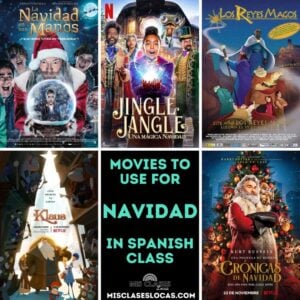
- NEW Christmas Movies For Spanish Class
- NEW New Year’s in Spanish Class Blog Post
- NEW Christmas Games & Free Actvities